Building my village: Becoming a carer
11 June 2026
By Claire Neal, Business Development Manager, CiC Wellbeing
During National Carers Week, we take time to recognise the vital role unpaid carers play in supporting loved ones through some of life’s most challenging moments. It’s
a chance to raise awareness, share experiences, and reflect on the realities of caring.
Becoming a carer didn’t arrive by choice or gradual adjustment. It arrived suddenly. In the wake of my husband’s stroke at 49, dividing our lives into ‘before’ and ‘after’.
The impact was immediate and far-reaching. A stroke doesn’t happen to one person alone; it reshaped our entire family. Fear became constant; fear of what we might lose, of who my husband would be, of what this would mean for our teenagers as their sense of safety was shaken. Alongside that fear sat an intensified love: protective and determined.
One of the first things I learned is that no two strokes are the same. The brain is incredibly complex, and the effects vary hugely from person to person. Recovery isn’t predictable or comparable. What progress looks like for one person can be completely different for another. Accepting that uncertainty has been part of my adjustment. Learning to take each day as it comes and to measure progress in a new way.
The word ‘carer’ carried a weight I wasn’t ready for. It felt like a label that threatened to replace being a partner, an equal, someone who had imagined a shared future built on certainty. With it came grief, not only for what was lost in that moment, but for the life we had assumed lay ahead of us. Letting go of that imagined future has been one of the quieter, harder parts of this experience.
The early days were driven by adrenaline. Stroke, intensive care, long nights, uncertainty. I coped because I had to. But when the immediate crisis passed, the exhaustion arrived. Not just physical tiredness, but the after-effects of trauma. My body began to catch up with everything it had held, and my mind replayed moments long after the danger had eased. It’s an invisible weight, and one that can be hard for others to see or understand.
Throughout all of this, the support of healthcare professionals has been extraordinary. From the emergency response to rehabilitation and ongoing care. Their skill, dedication, and compassion have carried us through moments that felt impossible. They have guided us, reassured us, and supported us in ways I will always be grateful for.
Alongside that, another unexpected reality emerged: suddenly being part of the world of people with disabilities. The practical adjustments to everyday life was a shift I hadn’t anticipated and didn’t feel prepared for. At first, it was difficult to accept. The sympathetic looks were hard to process. But over time, I’ve realised that, more often than not, those responses come from kindness. People want to help. There is humanity in those small interactions and learning to accept that has been a part of my own adjustment.
One of the most important pieces of advice I was given early on was to build a village around me. At the time, it felt overwhelming, just another thing to think about when everything already felt too much. I can say this: it has become essential. I have learned that I cannot do this alone. Support comes in many forms - family, friends, colleagues, professionals, but also from people who truly understand.
Connecting with others in similar situations has been invaluable. Peer support brings something different: a shared understanding that doesn’t need explanation, practical insight, and reassurance that I am not alone. Within those connections, hope becomes more visible. You see it in other people’s progress, in their resilience, in the way they keep moving forward.
Hope itself has changed for me. It’s no longer about returning to what life was before, but about recognising what is still possible. It lives in small steps, in moments of connection, in resilience. It has become something quieter, but also something stronger.
I’ve also been fortunate to have a supportive workplace. The trust my manager and colleagues have placed in me, along with the flexibility they’ve given me to continue working, has made a significant difference. My job has provided a sense of normality at a time when so much has felt uncertain. It has given me structure, purpose, and a feeling of control. All factors that have been incredibly important as everything else shifted.
At the same time, I’ve had to learn the importance of self-care, which doesn’t come naturally when your focus is on someone else. I’ve realised that looking after myself is not optional. It’s essential. Without it, I can’t sustain the care and support my family needs. Self-care can be small moments of rest, time to think, asking for help, or simply stepping away briefly to reset. It is a necessary part of this role, my role, as a carer.
Gradually, a “new normal” has begun to take shape. Expectations have shifted. Progress looks different. Life has, in some ways, become smaller, but also clearer. I have a sharper sense of what really matters. Through it all, there has been one unexpected but vital thread: humour. We have laughed - a lot. At the absurdity, at the challenges, at ourselves. Laughter has helped release tension, soften difficult moments, and importantly reminds us that we are still ‘us’.
This is not the future I planned, but within this changed landscape, there is still meaning. Becoming a carer has reshaped my life. It has shown me what endures. The importance of building a village, the necessity of caring for myself, the value of support - in all its forms - and the quiet, steady role of hope in helping me move forward.
Learn more about National Carers Week.
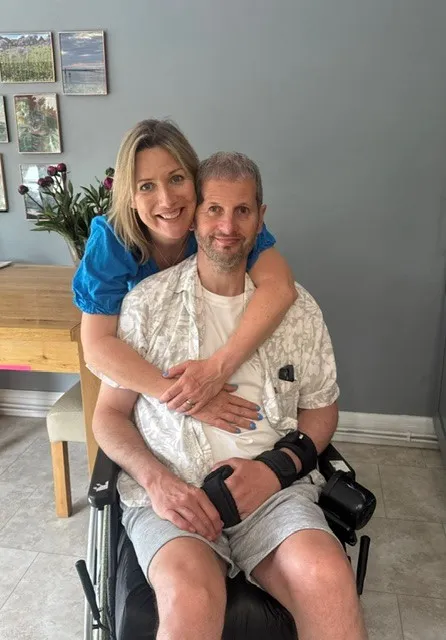
Claire Neal is a Workplace Mental Health Specialist at CiC Wellbeing with 28 years of experience promoting positive wellbeing at work. With a background in counselling and psychology, she brings specialist expertise and a consultative approach to supporting employees and organisations.
She has worked with senior leaders, HR, Occupational Health, Trade Unions, EDI and Health and Safety teams across diverse sectors to deliver effective mental wellbeing services. Claire is passionate about creating psychologically safe workplaces and practical, impactful strategies.